Microsoft Fabric
Redefining onboarding and AI integration for Microsoft’s data analytics ecosystem
Case Study
10 minute read
ROLE
Product Design Intern
TIMELINE
2025 (Jan - May)
SKILLS
Product Design
Prototyping
AI UX
karenhclai@gmail.com
What is Microsoft Fabric?








the challenge
Everything works,
but doesn't connect.
Overlapping Features
Fabric has multiple features that do similar tasks for slightly different use cases and users. How can we unify these features and provide one cohesive solution?
AI Ubiquity
How can Fabric implement Al in a ubiquitous way, how can we make it invisible/non- intrusive to the user?
the ask
OVERLAPPING
FEATURES
How can we unify these features features that do similar tasks in Fabric and provide one cohesive solution?
AI UBIQUITY
How can we implement Al in a ubiquitous way, how can we make it invisible/non- intrusive to the user?
GENERAL RECOMMENDATIONS
How can we change the ui/ux experiences for user pain points?
How might we simplify Fabric’s onboarding and AI flows to help users navigate complex data systems with clarity?
research
Mapping every path a user could take
outlining user flows and feature journeys across Fabric's workloads
powerbi
warehouse
science
engineering
factory
real time intelligence
research
Complexity wasn't the problem.
Clarity was.
What did we take away from the Information Architecture map and user journey?
Overlapping features
We found that the challenge isn't complexity itself but inconsistent structure and terminology.
Data Engineering
Data Factory
Fragmented workloads
The 6 workloads function well individually, but feel disconnected.
complex users, unclear flows
Fabric’s users are technically skilled
Lack of clarity (not data depth!) causes onboarding friction and feature drop-offs.
research
16 users, from senior engineers to founders
job roles
data field
FIEld Solutions
non Technical
by the numbers
where I sourced interviews and and how many I completed
16
interviews
experience
users’ experience with Fabric and/or PowerBI
RESEARCH
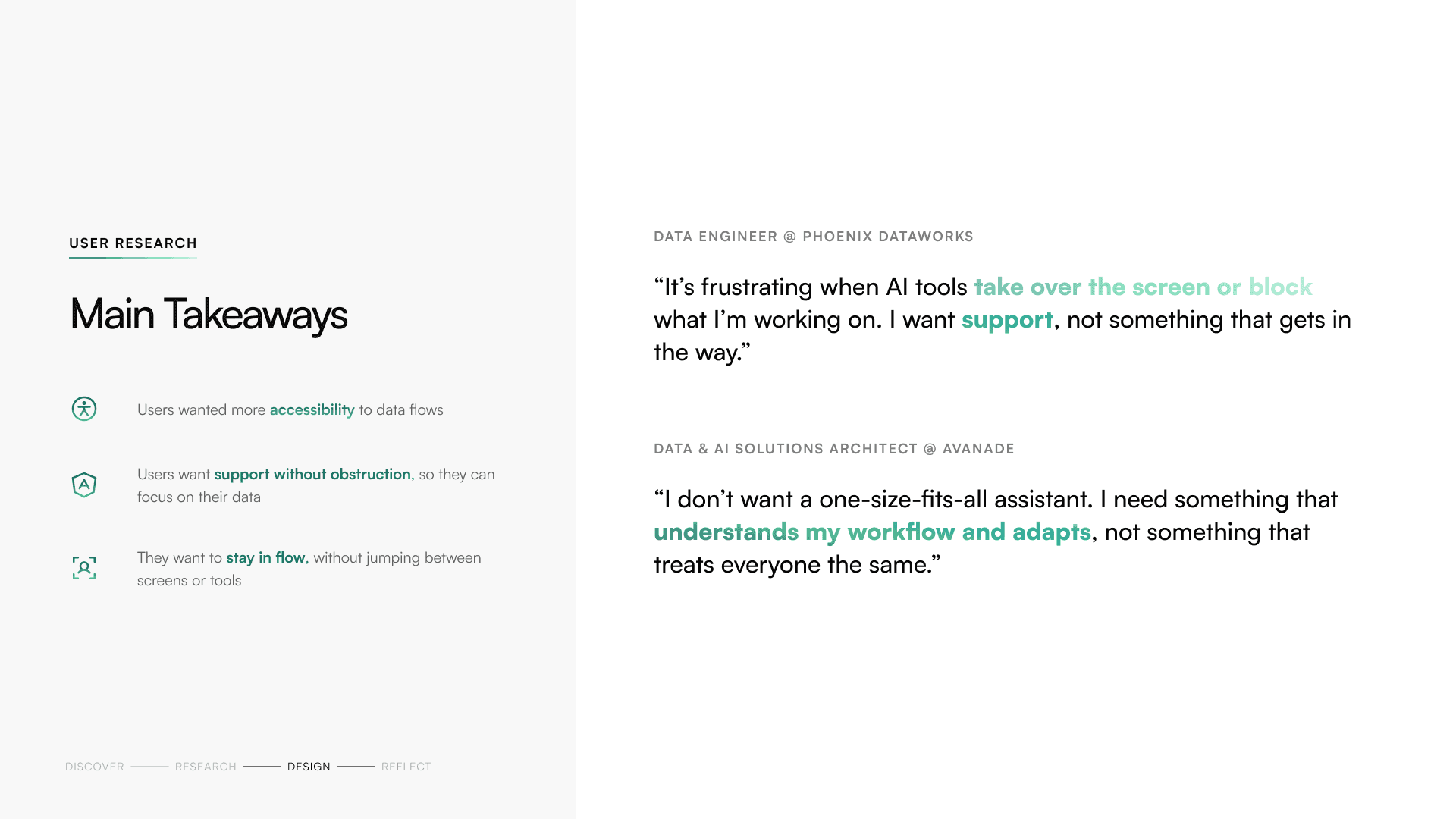
3 ways Fabric loses its users
Framework to gauge user pain points and insights.
01
AI Feature Uncertainty
Users were unaware of how AI was embedded in the platform and unaware of AI features.
02
Task Completion
Users struggled to complete certain tasks due to their uncertainty about what steps to take next or where to find necessary information.
03
Onboarding
Unintuitive navigation of tools/workspaces, leading to reduced productivity and frustration.
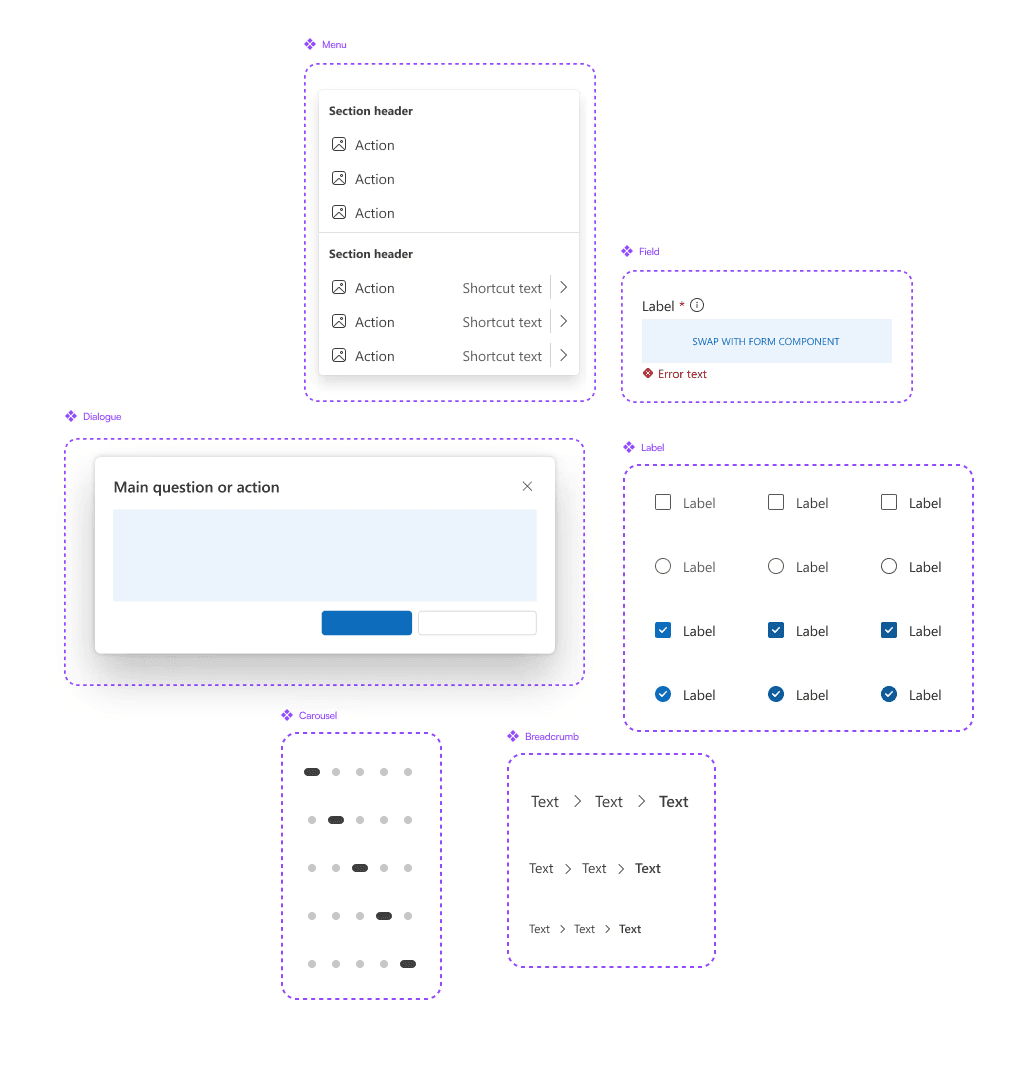
Design
Designing inside Microsoft's guardrails
To maintain a consistent interface and visual design across all iterations

microsoft Fabric Case Study
The rest of the case study is password protected.
If you'd like to read more than what's presented, please reach out to me!
go to case study
Reflection
Over the course of 5 months, I worked with Microsoft Fabric’s design team to explore and improve how users interact with complex data tools at scale. My role spanned from early research synthesis to prototyping and design iteration, working closely with designers, PMs, and engineers.
Big thanks to the Microsoft Fabric team, especially Gresshaa Mehta and Brent Sandifer for their guidance, collaboration, and trust throughout this project!
WHAT I'VE LEARNED
Designing for Scale Requires Systems Thinking
Working within a product ecosystem as large as Microsoft Fabric taught me to think beyond individual screens. Every design decision had to align with broader product principles, accessibility standards, and cross-platform consistency.
Cross-Functional Collaboration is a Design Skill
I learned how to navigate feedback loops between designers, PMs, and engineers—balancing technical constraints with user needs while keeping the end-to-end experience cohesive.
The Power of Storytelling
Clear, engaging narratives made it easier to communicate my ideas and influence decisions in team reviews. I saw firsthand how framing a problem and solution can turn a good design into a well-supported one.
Thanks for reading!